

Ontario’s greenhouse belt around Leamington and Kingsville is one of the largest greenhouse vegetable clusters in North America, and most of what it grows heads south. Tomatoes, cucumbers and peppers cross at Windsor–Detroit every day of the year, alongside field crops in season. Whether a produce load arrives sellable is usually decided before the truck leaves the dock. Four things decide it: the temperature of the product at loading, the setpoint, what else is in the trailer, and whether the paperwork reached the border before the truck did.
In short
- A reefer holds temperature. It does not pull field heat out of warm product, so cool the product before it is loaded.
- Greenhouse tomatoes, peppers and cucumbers are chilling-sensitive. For them, colder is not safer.
- FDA prior notice must be confirmed at least two hours before a truck reaches the US port of arrival.
Start with pulp temperature, not the setpoint
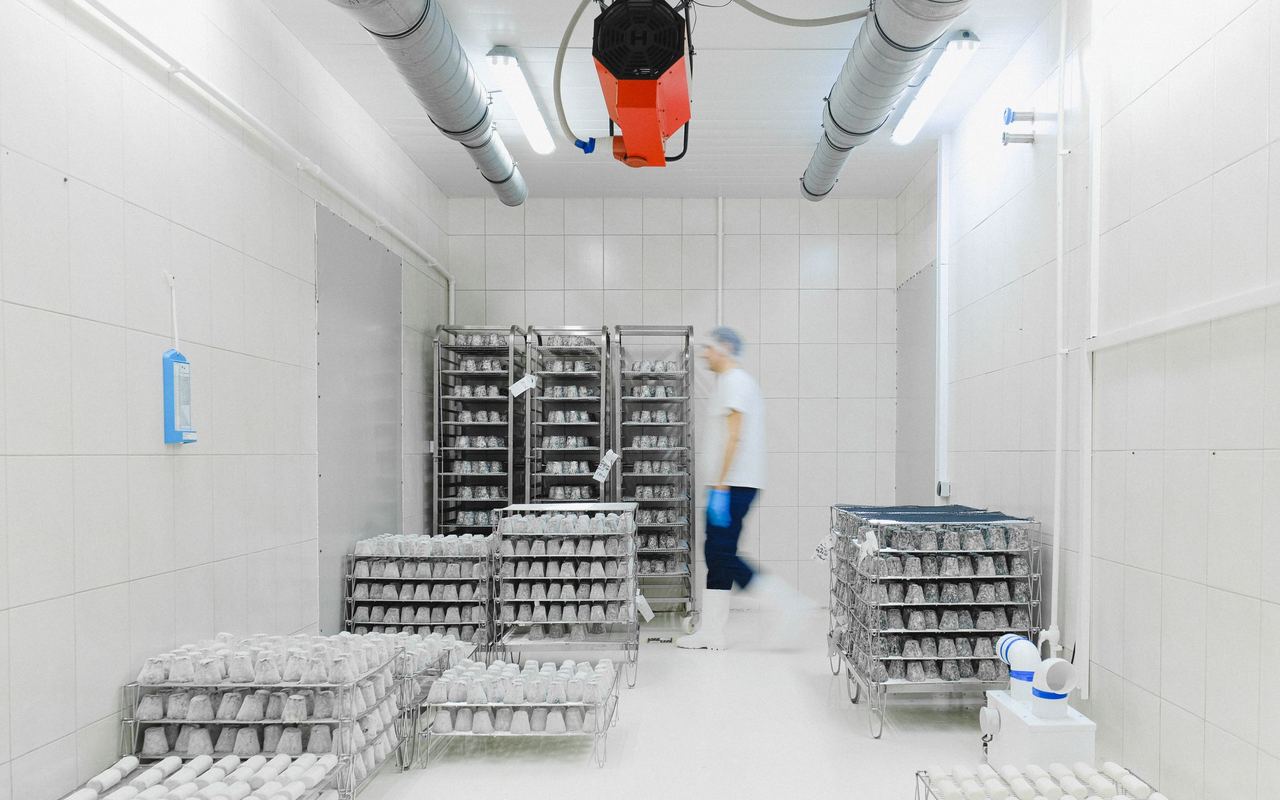
A refrigerated trailer is built to maintain a temperature, not to bring one down. Product loaded at 18 °C into a trailer set at 4 °C will take many hours to come down. On a short run, the pallets in the middle of the load may never reach setpoint at all. Field heat has to come out in a cooler or a forced-air pre-cooling room at the packer, before loading.
At the dock, that means:
- Probe the pulp temperature of several cases from different pallets as they are loaded, and write the readings on the bill of lading.
- Pre-cool the empty trailer to setpoint before the first pallet goes on, so warm walls and floor don’t heat the load.
- Run the unit in continuous mode for produce. Fruit and vegetables keep respiring after harvest, and they need steady airflow around the pallets, not the on-off pattern of a fuel-saving start-stop setting.
- Leave room for air to move. Don’t block the return-air bulkhead, keep product below the load line, and leave channels between pallets so cold air reaches the back of the trailer.
Know which products hate the cold
The most common temperature mistake on greenhouse loads is running them too cold. Many warm-season crops suffer chilling injury at temperatures well above freezing. The damage often doesn’t show until the product warms up at the receiver: pitting, water-soaked patches, uneven ripening.
| Product | Typical transit range | Watch for |
|---|---|---|
| Lettuce and leafy greens | 0–2 °C (32–36 °F) | Not chilling-sensitive; warmth cuts shelf life |
| Apples | −1–4 °C (30–40 °F) | Range depends on variety |
| Bell peppers | 7–10 °C (45–50 °F) | Chilling injury below about 7 °C |
| Cucumbers | 10–12 °C (50–54 °F) | Injury below 10 °C after two or three days |
| Tomatoes, mature green | 13 °C and up (55 °F+) | Chilling injury below 13 °C |
| Tomatoes, ripe or near-ripe | 7–10 °C (45–50 °F) | Lose flavour and texture if held colder |
These are planning ranges from post-harvest research, not instructions. The shipper’s written temperature specification always wins, and it should go on the bill of lading in both Celsius and Fahrenheit. US receivers read Fahrenheit, and a setpoint entered in the wrong unit is a claim waiting to happen.
Don’t mix what shouldn’t ride together
A mixed produce load runs at one setpoint unless the trailer is divided into temperature zones. Before mixing, check two more things:
- Ethylene. Apples, ripening tomatoes and some melons give off ethylene gas. Lettuce, cucumbers, broccoli and leafy greens are sensitive to it, and react by yellowing, spotting or ripening early. Keep them apart, or run them on separate trailers.
- Odour. Onions and some fruit pick up and pass on smells. Apples next to onions arrive tasting like onions.
If the commodities need different temperatures, use a multi-temperature trailer with bulkheads, or split the load. One compromise setpoint across a chilling-sensitive crop and a near-freezing crop ends up wrong for both.
Paperwork that has to reach the border first
Produce rides on the same customs discipline as any other cross-border load, plus a food-safety layer:
- FDA prior notice. Food imported into the US needs prior notice, and FDA must confirm it at least two hours before a truck arrives at the US port. It can be filed up to 30 days ahead through ACE, or 15 days ahead through FDA’s own web system, and the importer or their customs broker usually files it. If it went in through FDA’s system, the confirmation number has to travel with the truck.
- The carrier’s ACE eManifest and the PAPS barcode. These are covered in our eManifest guide and our PARS and PAPS explainer. A clean prior notice does nothing for a truck whose manifest is late.
- Plant-health requirements. Many Canadian-grown fruits and vegetables enter the US without an import permit, but some commodities need a phytosanitary certificate or carry extra conditions. Have your broker confirm by commodity before you book the truck, not after.
- Trading rules. Under the Safe Food for Canadians Regulations, most businesses that import, export or trade fresh fruit and vegetables across provincial lines must hold a licence and belong to the Fruit and Vegetable Dispute Resolution Corporation (DRC), with some exemptions. In the US, produce trading disputes fall under the Perishable Agricultural Commodities Act (PACA).
What belongs on the bill of lading
A produce bill of lading should leave nothing to the driver’s memory:
- Commodity, pack and case count, with the seal number.
- Setpoint in °C and °F, and continuous written out.
- Pulp temperatures taken at loading.
- Confirmation that the trailer was pre-cooled, and to what temperature.
- The FDA prior notice confirmation number, where it has to travel with the load.
At delivery, the receiver will probe the product and can ask for the temperature record. A load that left the dock warm and is documented as warm is a packing-house problem. A load that left cold and arrived warm is a carrier problem. Writing it down at loading decides which one you are looking at.
How Alpha Trans handles produce
Produce has been part of our freight since the Saini family started Alpha Trans in Brampton in 2002. Our multi-temp reefers run from −20 °F to 70 °F, log temperature continuously, alert dispatch if the load drifts off setpoint, and deliver a full temperature printout with the freight. Washouts between loads are standard. Leamington loads go out through Windsor–Detroit, where the new Gordie Howe International Bridge now gives trucks a second bridge. Our FAST-enrolled drivers and pre-filed paperwork keep the time at the booth short, and for a perishable load that time matters.
A produce load is only as good as its first hour on the dock. Request a reefer quote or talk to dispatch about your produce lane.
Filed under Cold chain
Cover photo: Lance Cheung, USDA via Wikimedia Commons , public domain